Does your laundry day sound less like a gentle swish and more like a rock concert in your utility room? You’re not alone. A Washing Machine Shaking Violently is one of the most common—and alarming—issues homeowners face. It can make you think your appliance is on its last legs, but more often than not, the culprit is something you can fix yourself in under an hour. Before you start pricing new models, let’s roll up our sleeves and diagnose that shaky situation. I’ve been there, staring at a washer that looked like it was trying to dance its way out the door, and I’m here to guide you through it.
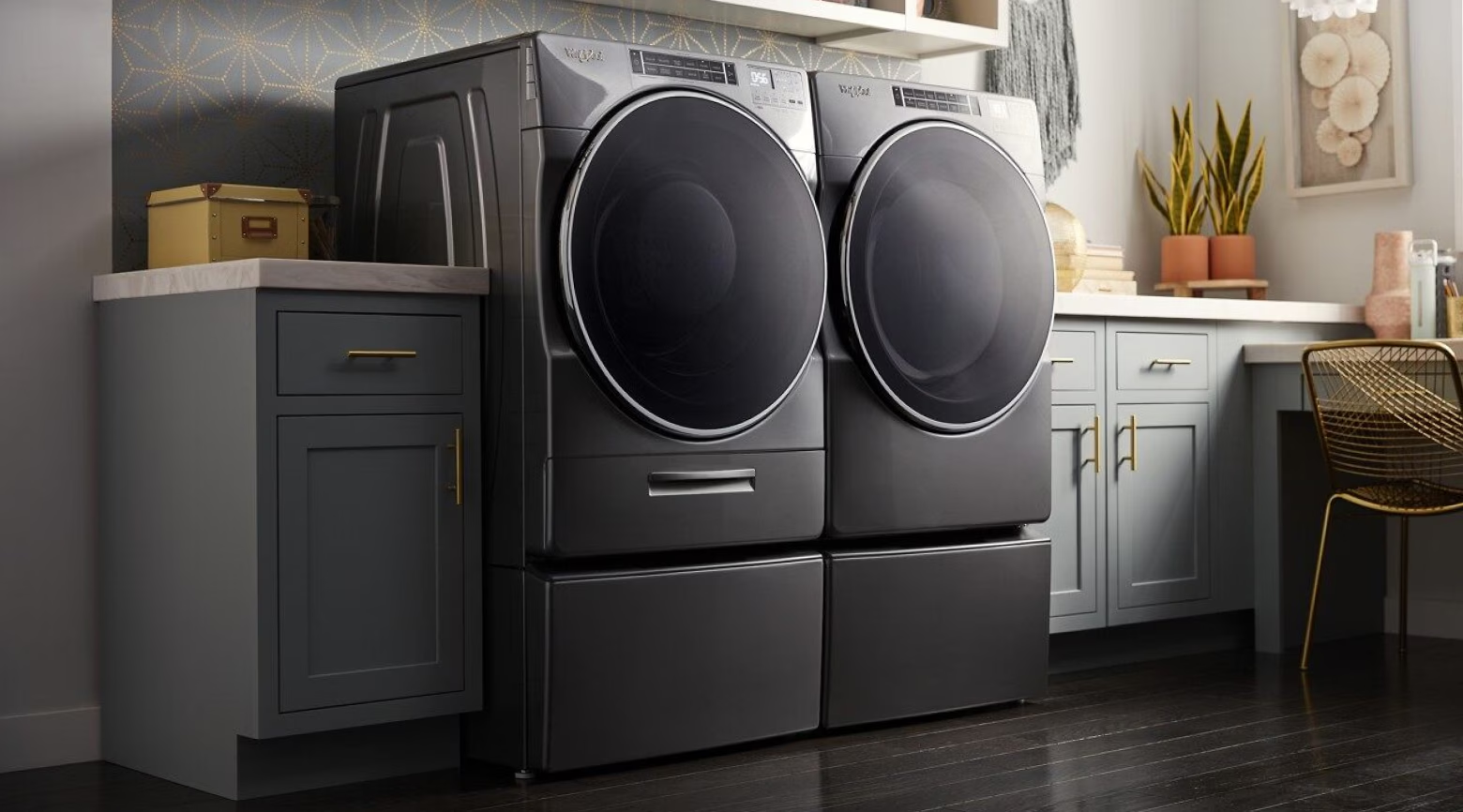
Why Does My Washer Shake So Much? The Usual Suspects
When a washing machine starts its spin cycle, it’s spinning a heavy, wet load at incredible speeds—often over 1,000 RPM. Think of it like a centrifuge. Any small imbalance can be magnified into a house-shaking vibration. Most of the time, the reason your washing machine shaking violently isn’t a catastrophic failure but a simple physics problem.
Here are the most common causes, from the easiest to fix to the more complex:
- An Unbalanced Load: This is the number one offender. A single heavy item, like a big towel, a pair of jeans, or a bathmat, can get thrown to one side of the drum. When the spin cycle ramps up, that off-center weight creates a powerful wobble.
- The Machine Isn’t Level: Your floor might look flat, but is it perfectly flat? If your washer is sitting unevenly, even by a tiny fraction, it will rock back and forth during the spin cycle. Over time, this can get worse.
- Shipping Bolts Are Still Installed: If your washing machine is brand new, this is a prime suspect. To protect the drum during transport, manufacturers install several large bolts in the back. These must be removed before use. Leaving them in locks the drum in place, transferring all the spinning force directly to the machine’s frame.
- Worn-Out Components: After years of faithful service, parts can wear down. The most likely culprits are the suspension rods (in top-loaders) or shock absorbers (in front-loaders) that are designed to dampen the drum’s movement.
A Step-by-Step Guide to Fixing a Shaking Washing Machine
Ready to play detective? Let’s walk through the diagnostic process. Grab a level and maybe a wrench—you’ve got this.
1. Stop the Cycle and Redistribute the Load
The moment you hear that tell-tale banging, pause the cycle. Open the door and take a look. Is everything bunched up on one side?
- For top-loaders: Simply move the clothes around, distributing them more evenly around the agitator.
- For front-loaders: Untangle any large items that have balled up. If you’re washing one heavy item, like a blanket, add a couple of lighter towels to help balance it out.
Restart the spin cycle. If the shaking stops, you’ve found your problem. To prevent this, always mix large and small items in your loads. You can learn more about this in our definitive guide on how to load a washing machine correctly for optimal performance.
2. The Wiggle Test: Is Your Washer Level?
Place a spirit level on top of the washer. Check it from front to back and from side to side. Is the bubble centered? If not, you need to adjust the machine’s feet.
Most washing machines have four adjustable feet with a lock nut. Here’s how to level it:
- Loosen the Lock Nut: Using a wrench, turn the lock nut on each foot counter-clockwise to loosen it.
- Adjust the Foot: Twist the foot itself to raise or lower that corner of the machine. Have a helper tilt the machine slightly to make this easier.
- Check Your Work: Place the level on top and continue adjusting until the bubble is perfectly centered in both directions.
- Lock It In: Once level, tighten the lock nuts on all four feet clockwise so they are snug against the base of the machine. This prevents them from vibrating loose over time.
Bảng trống.Pro Tip: Give the machine a gentle push on each top corner. It shouldn’t rock or wobble at all. If it does, one of the feet needs a final tweak.
3. For New Machines: Check for Shipping Bolts
I can’t stress this enough. I once helped a friend who was convinced their brand-new, expensive washer was a dud. The sound was terrifying. Turns out, the delivery guys never removed the shipping bolts.
These are typically 3 or 4 large bolts on the back of the machine, often with plastic spacers. Your user manual will show their exact location. Simply unscrew them with a wrench. You’ll notice an immediate difference. Keep these bolts! You’ll need them if you ever move the machine to a new home.
4. Digging Deeper: Inspecting Internal Parts
If you’ve tried the steps above and your washing machine shaking violently is still an issue, it might be time to look inside. This is a bit more advanced, but manageable for a confident DIYer. Always unplug the machine before starting any internal inspection.
Could it be the Suspension Rods? (Top-Loaders)
Suspension rods are like the shocks on a car for your washer tub. They support the tub and dampen its movement. If one or more fails, the tub can swing wildly.
- How to Check: Open the lid and push down firmly on the drum. It should feel springy but controlled. If it bounces around loosely or feels stiff, the suspension rods may be worn. Replacing them is a common repair and kits are widely available.
What about the Shock Absorbers? (Front-Loaders)
Front-loaders use shock absorbers, very similar to a car’s, to connect the outer tub to the base frame.
- How to Check: This usually requires removing the front or back panel of the machine. Once you can see them, look for signs of leaking fluid or physical damage. A failed shock absorber won’t provide any resistance, leading to violent shaking.
When Should I Call a Professional?
While many causes of a shaking washer are easy fixes, sometimes you need to call in the experts. It’s time to pick up the phone if:
- You’ve tried all the troubleshooting steps above and the problem persists.
- You’re not comfortable opening up the machine’s panels to inspect internal parts.
- You hear grinding or high-pitched squealing noises in addition to the shaking, which could indicate a bearing failure—a much more complex repair.
- The machine is leaking water.
As our trusted appliance repair expert, David Chen, often says:
“The most common and costly mistake I see is when homeowners ignore a shaking machine. What starts as a simple leveling issue can eventually wear out critical components, turning a ten-minute fix into a few-hundred-dollar repair job. Address the shake as soon as you notice it.”
Frequently Asked Questions (FAQ)
1. Is a washing machine shaking violently dangerous?
It can be. In extreme cases, the violent vibrations can damage water and drain hoses, leading to leaks and significant water damage. It also puts immense stress on the machine’s components, potentially causing further failures. It’s best to stop the machine and diagnose the issue immediately.
2. How much shaking is normal for a washing machine?
A small amount of vibration is normal, especially during high-speed spin cycles. You should feel a gentle hum or vibration if you place your hand on the machine. However, it should not be banging, “walking” across the floor, or shaking so much that items on top of it are falling off.
3. Can an unbalanced load permanently damage my washer?
An occasional unbalanced load is unlikely to cause permanent damage. However, if it happens frequently, the repeated stress on the suspension, shock absorbers, and bearings will cause them to wear out prematurely, leading to costly repairs down the line.
4. Why does my front-load washer shake more than my old top-loader?
Front-load washers have significantly higher spin speeds than most top-loaders to extract more water from clothes. This efficiency comes at a cost: they are much more sensitive to being unbalanced or not perfectly level.
5. Can I put an anti-vibration mat under my washing machine?
Yes, anti-vibration pads or mats can be very effective, especially if your washer is on an upper floor or a slightly springy wooden floor. They absorb a lot of the residual vibration. However, they are a supplement, not a cure. You must still ensure the machine is properly balanced and leveled first.
Stop the Shake and Enjoy the Quiet
A washing machine shaking violently can disrupt the peace in your home, but it’s rarely a death sentence for your appliance. By working through these simple checks—balancing your laundry, leveling the machine’s feet, and checking for pesky shipping bolts—you can solve the problem over 90% of the time. You’ll not only save yourself the headache and the noise but also extend the life of your hardworking machine. Now you can get back to a laundry day that’s refreshingly quiet.